

Practice does not make perfect. Practice makes permanent.
I’m told a golfer has to hit a ball 20,000 times for it to become second nature. They hit on average less than 70 shots a round. The practice V actual ratio for one round is 285.71 shots they attempt for one round of seventy. The investment into getting it right in private is significant because the payoff of getting it right in public is more significant.
Leaders are constantly navigating the tension between speed (getting it done), quality (making it great), and creating culture (consistent actions and attitude) all the time. And all the conversations I have are about making sure the intersection of these three becomes second nature to the organisation they’re in and the teams they are leading.
Questions I am consistently asked include?
- How do we get clear on our values?
- How do we know we are living our values?
- What do we do if someone violates our values?
- How do we clarify our culture?
- How do we respond to behaviour that is below the line?
- What is the best way to inspire and equip new leaders into our values and culture?
- How do we deepen our organisational culture so it’s who we are by second nature?
Leaders who take the time to get clear on culture and values are already doing an outstanding job. Just that work alone can be the catalyst for alignment, change and growth. And the reality, it’s not enough. We need to do the increasingly hard work of seeing this through to achieve real and observable change in our teams and in the organisation. It’s both easy and hard at the same time.
Practice makes Permanent – so the KIND of practice matters. What you practice, you perfect, so in order to make values, culture and behaviour aligned and real then what we do, for how long, how we evaluate, reward, inspire and protect what really matters.
It looks like this:
Organisational Culture Model – Practice makes Permanent
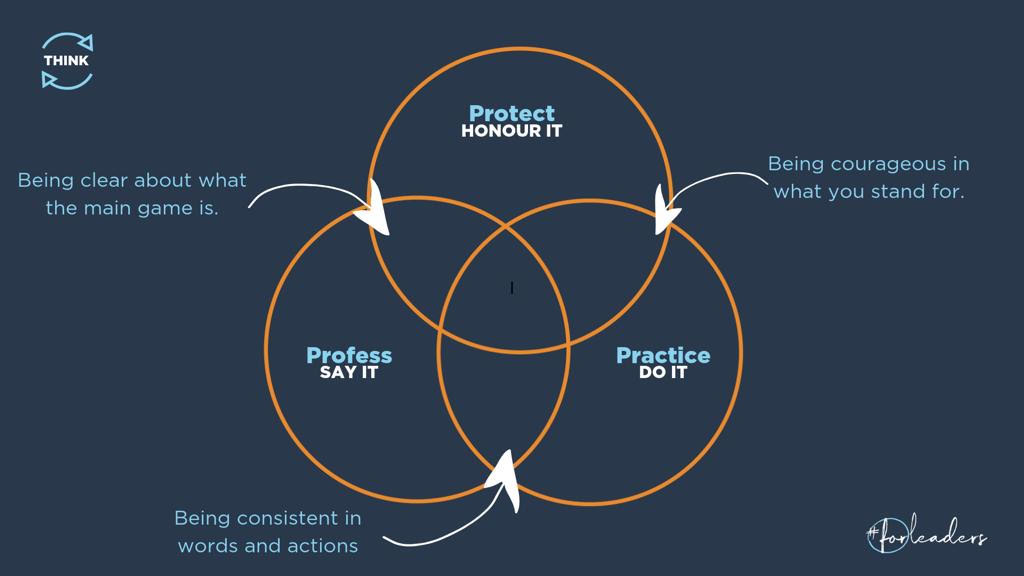
There are three steps to clarify culture and values:
- Say it – Profess. Take the time to be clear on what it is that matters.
- Do it – Practice. Be disciplined enough to be and do what you say you are and;
- Honour it – Protect. Respect the work enough to call people up to a greater commitment.
Profess it, practice it and protect it. Easy right? Yes, and no.
When you say it, and practice your values and culture, you must lead your team to be consistent in what they say and what they do. The dissonance created by this gap will cost you greatly in terms of engagement, traction and momentum.
When you profess it and protect your values and culture, you must lead your team towards being clear about what the main game is. You get to choose what your values and culture will be and change it if you need to. What you can’t allow yourself to be is being unclear on what you stand for and what you are becoming. That clarity will repel some at the start and be the genesis for attracting who you are and what you want your leadership to stand for.
When you practice and protect your values and culture you must lead your team towards being courageous in what you stand for. And be equally explicit in what you won’t stand for. THIS IS THE TOUGH STUFF OF LEADERSHIP. The real life what do you do when someone violates who we are. People can agree with any poster in your building but they will tell you what they believe by their actions.
The nuance here is developing a culture that once we have professed and are practising our culture we know what we have to be and do to protect it.
These five steps will help:
- Do the work together to Profess/Say it. Clarity precedes action.
- Define what each value really means. The definition gives immediate feedback on consistency.
- Talk about what living this value would look like and what NOT living it might look like. Create your list so you can help each other see and understand.
- Ask your leadership group “How do we handle one another when this goes off track.”
- Accepts the rules of engagement for accountability with one another. Treat each other with humanity as you work them into your daily practices so it becomes second nature.
Like one of the 20,000 shots, each of us has the opportunity to move closer to our values and more aligned to our culture to the point where we are unconsciously aligned serving the people, the mission and enjoying the benefits.
#FORLEADERS
This is for leaders. I am for leaders.


Leave A Comment